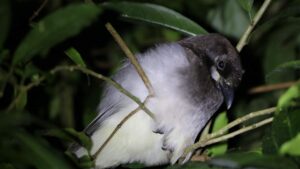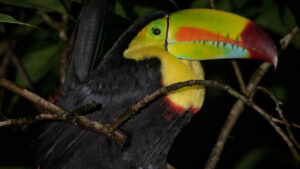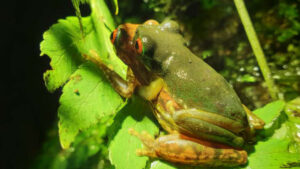
A bird watching tour Monteverde visitors can enjoy does not require years of experience or a long list of species to be worthwhile. At Refugio Monteverde, a naturalist guide leads a three-hour morning walk through protected cloud forest, helping visitors notice birds by sight and sound. The regular published start time is 6:30 a.m., when an early start gives you time to explore the forest as it wakes.
The refuge is home to diverse wildlife, and the site notes that Monteverde has more than 500 bird species. That is a regional figure, not a promise of what you will see on one walk. Birds move freely through their habitat, and sightings vary with conditions and the day’s activity. The experience is about looking and listening carefully, not checking off a guaranteed list.
What happens on a bird watching tour in Monteverde?
Your guide leads the group along forest trails, pointing out calls, movement, and other clues that can be easy to miss on your own. A bird may be high in the canopy, partly hidden by leaves, or heard before it is seen. Naturalists can help you make sense of these moments and explain how birds relate to the cloud forest around them.
Guides use observation equipment, including telescopes, to help visitors view birds that are far away or perched above the trail. If you own binoculars, bring them; they can be useful for scanning branches and following movement. Ask Refugio Monteverde directly what equipment is available for your visit rather than assuming that personal binoculars are included.
Species associated with the Monteverde region include hummingbirds, toucanets, the three-wattled bellbird, and the resplendent quetzal. These are examples of birds people may hope to find, not a list of sightings guaranteed on the tour. Your guide may also introduce you to less familiar birds through their calls, behavior, and habitat.
Is the early morning bird tour suitable for beginners?
Yes. You do not need to know bird names, use binoculars confidently, or be an experienced birder to join. Tell your guide what interests you, whether that is learning to recognize calls, seeing a particular kind of bird, or simply slowing down and noticing the forest. A little curiosity is enough to begin.
Visitors with birding experience can enjoy a focused search with a naturalist, while beginners can learn at their own pace. It can help to move quietly, pause when the guide points something out, and look where they direct you before trying to scan the whole canopy. Even when a bird stays hidden, listening can be part of the discovery.
For a broader introduction to the refuge’s wildlife and forest, compare this outing with the Natural History Tour. For a focused birding experience, see the details of the Birdwatching Tour.
Birdwatching Tour and Natural History Tour compared
| Tour | Regular published schedule | Duration | Main focus |
|---|---|---|---|
| Birdwatching Tour | 6:30 a.m. | 3 hours | Finding and observing birds with a naturalist guide |
| Natural History Tour | 8:00 a.m. or 10:00 a.m. | 2.5 hours | A wider introduction to the forest and its natural history |
Choose the Birdwatching Tour if birds are your main interest and an early start suits your plans. Consider the Natural History Tour if you would rather explore more aspects of the forest. Published schedules can change, so confirm current details with the refuge before visiting.
How to prepare for your visit
- Plan for the early start. The regular birdwatching departure is at 6:30 a.m. Check your booking details and arrival instructions in advance.
- Dress for cloud-forest conditions. Wear comfortable walking shoes and bring layers and rain protection. Weather can vary, so check the forecast and follow the refuge’s guidance.
- Bring binoculars if you have them. They are useful for scanning the forest, while the guide’s telescope can help with distant views. Confirm equipment arrangements with the refuge.
- Keep your attention on the forest. Move quietly, follow your guide’s directions, and avoid calling to or approaching wildlife. For additional ways to observe responsibly, read Audubon’s guide to ethical birding.
Refugio Monteverde’s tours take place inside a protected wildlife refuge and cloud forest. The family-run project grew from a former dairy farm and supports conservation and forest restoration. Learning about the habitat is part of what makes a guided walk different from simply spotting birds along a trail. You can learn more about the refuge’s background on the About us page.
Frequently asked questions
What time does the Birdwatching Tour start?
The regular published start time is 6:30 a.m., and the tour lasts three hours. Confirm the schedule for your chosen date directly with Refugio Monteverde.
Do I need birdwatching experience to join?
No. Beginners are welcome. A naturalist guide can help you notice birds, recognize calls, and understand what you are observing, even if you are new to birding.
Will I see a quetzal or other specific bird?
No specific sighting can be guaranteed. Birds move naturally through the forest, and what you see or hear depends on their activity and conditions during your visit.
Should I bring binoculars?
Bring your own binoculars if you have them. The refuge’s guides use observation equipment such as telescopes, but contact the refuge to confirm what equipment is available to visitors.