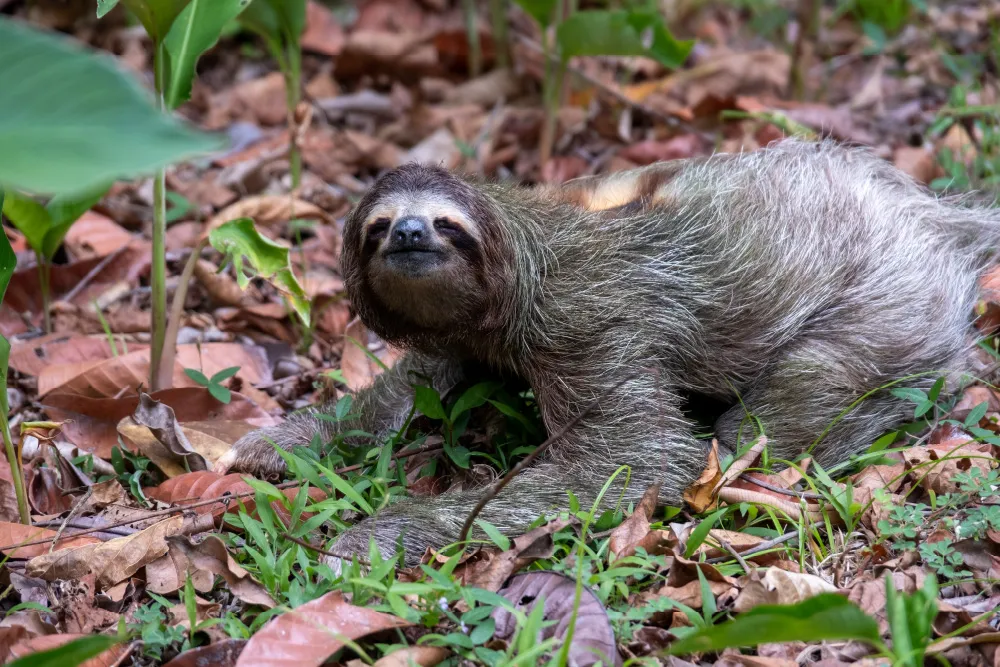
Sloths in Monteverde live among the trees of the cloud forest, where camouflage and slow movement can make them hard to spot. A guided daytime or nighttime walk offers different opportunities to look for them, but no tour can guarantee an encounter.
Which sloths might you see in Monteverde?
Costa Rica is home to Hoffmann’s two-toed sloth and the brown-throated three-toed sloth. Both spend much of their time in trees, and either may be difficult to notice when resting among dense leaves. Their names refer to the number of toes on their front limbs; both species have three toes on their hind limbs.
- Hoffmann’s two-toed sloth: Generally more active at night, though it may also be awake or moving during the day.
- Brown-throated three-toed sloth: Often active during daylight, but its activity varies and it can remain still for long periods.
These are broad patterns, not a timetable for sightings. Weather, foliage and each animal’s behavior affect what visitors can see. For more information about these species, see the University of Michigan’s Hoffmann’s two-toed sloth profile and brown-throated three-toed sloth profile.
Where to see sloths in Monteverde
Look into the canopy rather than only along the trail. Sloths can blend into branches and foliage, and their fur may appear greenish because of algae. Sometimes a guide will notice a shape or a small change in position that is easy to miss with the naked eye.
At Refugio Monteverde, guided walks take place in a protected wildlife refuge and cloud forest. Naturalist guides scan the habitat and can use observation equipment to help visitors see wildlife while giving animals space. The refuge is not a zoo: animals move freely through their habitat, so what you see can vary from visit to visit.
If you are deciding between daytime and nighttime wildlife walks, compare the Refugio Monteverde tours and choose based on the kind of forest experience you want. The refuge’s story and conservation work also explain how a former dairy farm became a place for forest restoration and nature education.
When is the best time to look for sloths?
There is no single best hour for every sloth. A daytime walk gives you the chance to scan the canopy in natural light and may suit a search for brown-throated three-toed sloths. An evening walk offers a different view of the forest and a chance to look for nocturnal wildlife, including Hoffmann’s two-toed sloth. Neither option is reliably better on every visit.
Refugio Monteverde lists its Natural History Tour as 2.5 hours, with regular departures at 8:00 a.m. and 10:00 a.m. The Night Tour lasts two hours, with regular departures at 6:00 p.m. and 8:00 p.m. These are general forest and wildlife walks, not sloth-only tours. Schedules can change, so check the official Natural History Tour and Night Tour pages before planning.
| Walk | What it offers for a sloth search | Published duration and regular departures |
|---|---|---|
| Natural History Tour | Daylight to scan the canopy and learn about the forest with a naturalist guide. | 2.5 hours; 8:00 a.m. and 10:00 a.m. |
| Night Tour | A guided search after dark, when nocturnal wildlife may be active. | 2 hours; 6:00 p.m. and 8:00 p.m. |
Why a guide helps you look for sloths
Sloths can be partly hidden by leaves and may stay motionless for extended periods. A naturalist guide knows how to scan the canopy, recognize possible signs of wildlife and use observation equipment where available. Just as importantly, a guide can help the group look without stepping off the trail or disturbing an animal. Even if no sloth appears, noticing how the forest works can make the search worthwhile.
To make your walk more rewarding:
- Tell your guide that you are interested in sloths, while keeping expectations flexible.
- Look where your guide points and give your eyes time to adjust to the canopy or low light.
- Use a scope or binoculars if offered, and stay on the marked trail.
- Keep your voice low. Never touch an animal, shake branches or call to wildlife.
- Do not use flash photography. If you take a photo, use a zoom lens and follow your guide’s directions.
Frequently asked questions
Can I see sloths on a Monteverde night tour?
Possibly. Hoffmann’s two-toed sloth is generally nocturnal, so an evening walk gives you a chance to look for it. Sloths are wild animals, however, and sightings are never guaranteed. The Night Tour explores a range of wildlife rather than focusing only on sloths.
Is a daytime or nighttime walk better for seeing sloths?
Each offers a different opportunity. Daylight can help you scan the canopy for brown-throated three-toed sloths, while a night walk may suit a search for nocturnal Hoffmann’s two-toed sloths. Activity varies, so neither time is consistently best.
Are there dedicated sloth tours in Monteverde?
Refugio Monteverde lists Night, Private Night, Birdwatching and Natural History tours. Its walks explore the refuge and its wildlife; they do not promise encounters with a particular species. Check the official tour information before booking.
How can I photograph a sloth without disturbing it?
Stay on the trail, follow your guide’s instructions and use a zoom lens or observation scope if available. Do not use flash, touch the animal, shake branches or ask anyone to move it for a photograph.